 العربية
 English
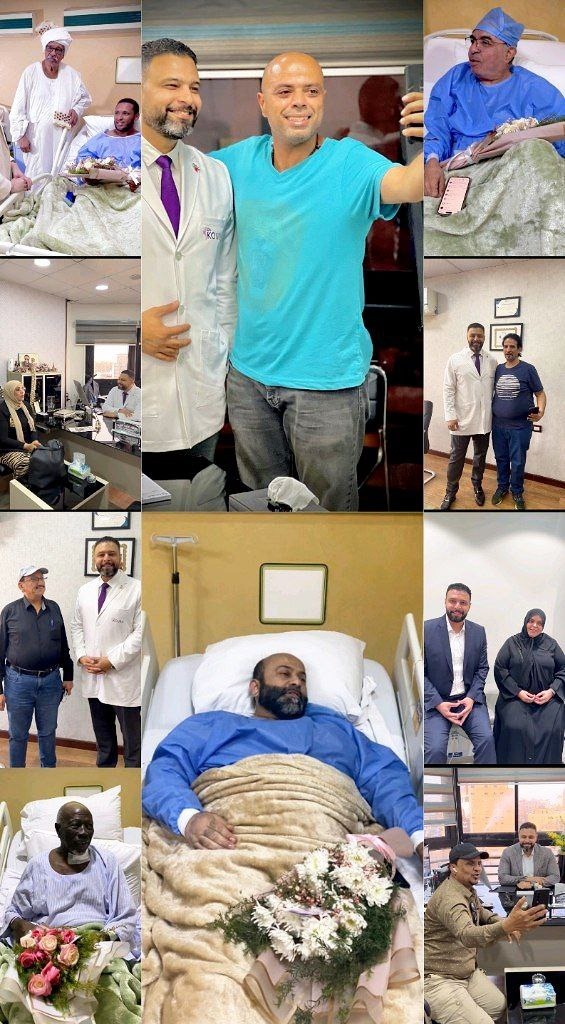
To see patients' reviews
Click hereMinimally invasive disc removal using endoscopic spinal canal surgery
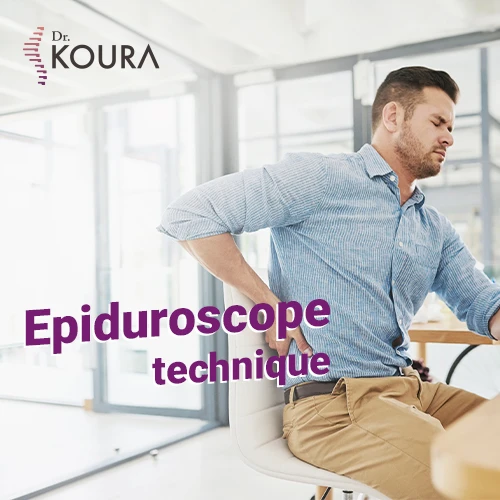
Symptoms
- Lower Back Pain
- Sciatica
- Leg Numbness
The Epiduroscope represents a breakthrough in the field of Non-surgical treatment for herniated disc for spinal column conditions, particularly in cases of Failed back surgery syndrome.
Despite the simplicity of this technique, which involves a fine needle, it requires exceptional skill. Dr. Mohamed Koura is the only physician in the Middle East and one of the few worldwide capable of performing such procedures.
To understand the importance of the epiduroscope, it's crucial to first understand the concept of Persistent Spinal Pain Syndrome, which is the modern term for what was previously known as Failed Back Surgery Syndrome.
Persistent Spinal Pain Syndrome refers to chronic Lower back pain following spinal surgery, particularly in the lumbar and sacral regions. This pain persists after surgery or recurs after a period of pain relief, resembling pre-surgery pain. The pain may result from surgical failure, adhesions from surgery, or recurrent Herniated disc.
Foraminal Endoscopy Procedure for Lower Back Pain
In cases of small recurrent Herniated disc or adhesions that affect the nerve root and stenosis, foraminal endoscopy may be very useful in Non-surgical treatment for herniated disc without the need for further surgery.
Under local anesthesia and fluoroscopic guidance, the procedure is performed under sedation. A monorail catheter is introduced through a fine needle into the nerve root canal, and an endoscope, camera, and light source are introduced to provide a full view of the nerve root canal, and surgical dissection of adhesions around the nerve roots is then done at the level of stenosis for Lower back pain treatment.
The procedure typically takes about 40 minutes from start to finish.
Advantages and Recovery of Foraminal Endoscopy
- Complete safety for Non-surgical treatment for herniated disc.
- Short operating room time for Lower back pain treatment.
- No need for incisions in the skin or muscles.
- Avoidance of surgical intervention and its complications.
- Discharge from the hospital approximately one hour after the procedure, with no need for prolonged hospitalization.
- Only 24 hours of required rest post-procedure, after which the patient can quickly return to normal activities.
If you are still experiencing Lower back pain after spinal surgery, contact Dr. Mohamed Koura's center, the only facility in the Middle East that provides a solution for post-back surgery Herniated disc pain syndrome.
Dr. Mohamed Koura is here to assist you using the latest therapeutic techniques, including thermal radiofrequency and laser treatments for spinal pain without surgery—book your appointment now from here.
Why Choose Dr. Mohamed Koura ?
Simply because he is the best doctor in his feild. He stays updated on the latest treatment technologies through his participation in various international conferences with leading foreign doctors and experts. Finally, and most importantly, Dr. Mohamed Koura is the best doctor in Egypt and the Arab world, possessing 12 non-surgical techniques for treating spinal and joint problems. He was the first to introduce modern interventional treatment techniques in Egypt & the Middle East and is the only one using the disc fx technique to treat spinal pain.
Certainly not, some cases must be treated surgically, and the most appropriate technique for the patient is determined through a medical examination and the presence of imaging studies.
No, it is necessary to make a reservation through a phone call or social media messages.
There are no risks or side effects associated with non-surgical pain interventions.
The patient needs only 3 to 4 days before they can travel comfortably, and the hospital stay does not exceed 6 to 8 hours.
A condition cannot be accurately assessed and a proper medical diagnosis made without a medical examination and recent imaging studies.
Yes, there are several payment methods available through Visa or electronic wallets by making a reservation on our website.
Certainly, obesity is one of the causes of knee osteoarthritis.
Radiofrequency activates the nerve and does not cause any damage to it.
Non-surgical interventions are a definitive treatment for some cases and pain relievers for other cases, which is determined by the doctor through a medical examination.
If the herniated disc is fully treated, there is a possibility of it reoccurring in some cases, such as not following the doctor's prescribed instructions after the intervention, experiencing an accident, or making a sudden wrong movement like lifting heavy objects.
The entire disc is not removed due to the presence of several risks and it may exacerbate the condition. Only the protruding part that causes pain is removed.
This cannot be done with radiofrequency, but it is performed through other techniques that Dr. Koura conducts.
The success or failure of non-surgical interventions cannot be judged through radiographic imaging because these procedures involve making subtle changes to critical parts to address the issue. Consequently, they do not produce significant changes to avoid potential complications in the future or damage to the spine and joints, which is our primary goal.
Spinal stenosis does not typically cause sciatica. In most cases, disc herniation is what may lead to sciatica. This does not necessarily mean that a patient with sciatica will also have spinal stenosis.
Sciatica may return if the patient does not adhere to the medical instructions provided by the doctor or in the event of an unexpected accident.
Lower back pain can result from several causes, including a herniated disc, nerve compression, muscle strain, or chronic spinal injuries. Lifestyle factors such as prolonged sitting, muscle weakness, and excess weight can also exacerbate the problem.
Yes, most cases can be successfully managed with non-surgical treatment for lower back pain. Options such as medication, nerve root injection, disc injection, and radiofrequency therapy are highly effective in relieving pain and improving mobility without the need for surgery.
The best treatment for back pain depends on the cause and severity of the condition. Typically, it starts with medication for back pain, followed by minimally invasive procedures like nerve root injections or radiofrequency therapy to target the source of pain effectively.
Yes, radiofrequency therapy is considered a safe and effective option for chronic lower back pain. It works by interrupting pain signals from the affected nerves and provides long-lasting relief, especially in cases of herniated disc and spinal pain.
A life without pain without surgery
Once you book with Dr. Koura
Get rid of pain with just one call… Book your appointment now with Dr. Mohamed Koura, the best pain management doctor and a specialized consultant in spine treatment.
The highest success rates thanks to years of experience and scientific development
Using the latest non-surgical technologies available in Egypt and the Middle East
The largest team specialized in treating spine and joint pain without surgery





-webp.webp "Al watania poultry")



-webp.webp "Egyptian Takaful")
































Services
Our Branches
- Egypt
- +201210577770
- 54, intersection of Al-Batal Ahmed Abdel Aziz Street with the League of Arab States, above Qatar National Bank - Mohandiseen - Giza
- Dubai
- +971501232065
- Dubai Healthcare City Phase 2 - Al Jaddaf - Dubai - United Arab Emirates
- Libya
- +218934802987
- Ghairan rood, Janzur, ,Tripoli, Libya