 العربية
 English
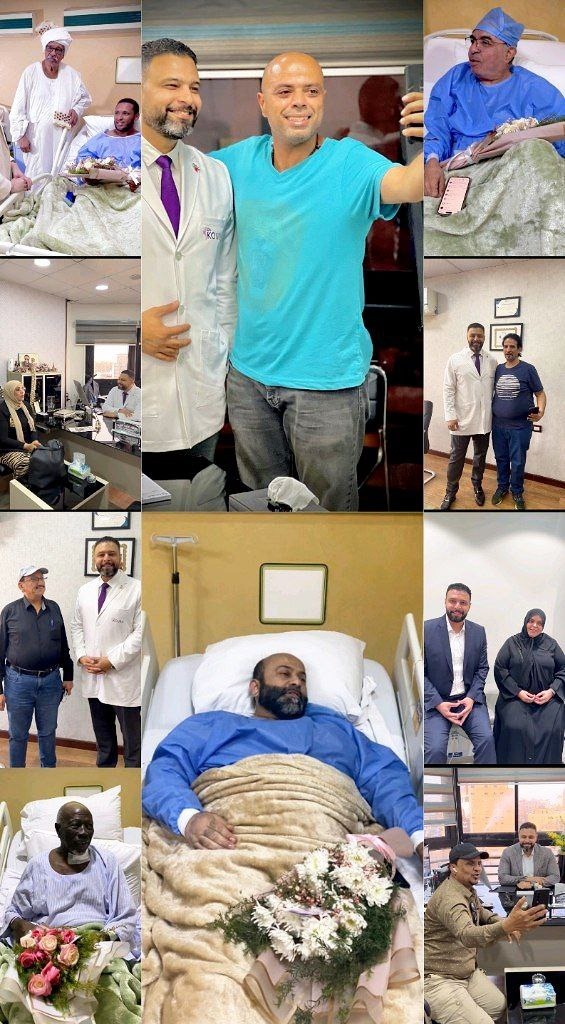
To see patients' reviews
Click hereSciatica treatment without surgery

Symptoms
- Sciatica
- Back Pain
- Leg Numbness
Sciatica Is A Very Common Symptom That Concerns Many Patients. It Refers To Pain Following The Path Of The Sciatic Nerve, Starting From The Nerve Roots In The Lower Back And Extending Down To The Tips Of The Toes. Contrary To Popular Belief, Sciatica Is A Symptom, Not A Disease Or A Diagnosis On Its Own.
Sciatica Pain Is Often Related To Conditions Like Lumbar Herniated Disc, Spinal Stenosis, Or Nerve Root Compression, And It Can Significantly Affect Mobility And Quality Of Life. Advanced Non-Surgical Herniated Disc Treatment Options At Dr Koura Center Can Help Relieve Sciatica And Lower Back Pain Effectively.
When is pain referred to as sciatica?
Any pain, tingling, or numbness that may be present in the buttocks, the back of the leg, foot, or toes, and may be accompanied by lower back pain.
What are the causes of sciatica?
- A lumbar disc herniation may cause pressure on the nerve roots that form the sciatic nerve.
- Narrowing of the lumbar spinal canal.
- Spondylolisthesis.
- Inflammation of the lumbar nerve roots.
What should I do if I feel sciatica pain?
Initially, Sciatica Pain May Improve With Painkillers And Simple Exercises For Lower Back Pain. However, If The Pain Persists Or Increases In Intensity, It Is Recommended To Book An Appointment With Dr Koura. He Will Assess The Condition, Determine The Cause Of Sciatica, Make An Accurate Diagnosis, And Recommend The Most Effective Herniated Disc Treatment Or Non-Surgical Spine Treatment Options To Relieve Pain And Restore Comfort.
How is the cause of sciatica diagnosed at Dr. Mohamed Koura’s center?
Diagnosis Of Herniated Disc And Lower Back Pain Begins With Listening To The Patient’s Detailed Description Of Symptoms, Followed By A Thorough Medical Examination. To Ensure Accurate Assessment, Tests May Be Requested, Including X-Rays Of The Lumbar Vertebrae And An MRI Of The Lumbar Spine.
After Reviewing The Test Results, Dr Koura Determines The Most Appropriate Non-Surgical Herniated Disc Treatment Or Spine Treatment Plan For The Patient, Ensuring Accurate Diagnosis And Effective Pain Relief.
What are the treatment methods for sciatica?
- Medication and physical therapy sessions for some mild cases.
- Interventional pain management techniques, which are suitable for most cases.
- Surgical intervention if there is a large disc herniation, leg weakness, or advanced spondylolisthesis.
We will now discuss the non-surgical interventional techniques available at Dr. Mohamed Koura’s center, which are 12 methods for treating lower back pain.
Important notes:
- All these techniques are performed in the operating room or the catheterization room.
- All interventions are done under the guidance of interventional radiology with local anesthesia and a sedative.
Advantages of non-surgical procedures:
- The patient’s stay in the hospital does not extend beyond an hour after the procedure.
- Safe and effective treatment.
- No side effects from the procedures.
- Quick return to normal life.
1. Lumbar Nerve Root Injection:
- A non-surgical intervention to remove lower back pain caused by inflammation of the lumbar nerve roots in many cases, such as lumbar disc herniation, osteoarthritis of the lumbar vertebrae, and mild spinal canal stenosis.
- Procedure duration is approximately 5 minutes.
2. Pulsed Radiofrequency of Lumbar Nerve Roots:
- A non-surgical intervention usually used when there is pain extending from the lower back to the lower limbs or numbness caused by inflammation of the lumbar nerve roots due to lumbar disc herniation or spinal canal stenosis.
- Procedure duration is approximately 30 minutes.
3. Radiofrequency Ablation of Lumbar Facet Joints:
- A non-surgical intervention used in case of osteoarthritis of the lumbar facet joints.
- Procedure duration is approximately 30 minutes.
4. Canal Decompression by Catheter:
- A non-surgical intervention used for spinal canal stenosis and failed back surgery to reduce pressure on the lumbar nerve roots without resorting to surgical operations.
5. Percutaneous Laser Disc Decompression:
- A non-surgical intervention for treating small lumbar disc herniations.
- It involves a needle that ablates the nucleus of the disc from within to reduce pressure on the lumbar nerve roots and remove the inflammation source.
- Procedure duration is approximately 40 minutes.
6. Disc-FX Procedure for Disc Herniation:
- A non-surgical intervention used when there is a herniated disc pressing on the nerve roots.
- The procedure is done through a needle that removes a small part of the disc pressing on the nerve roots.
- This technique is unique to Dr. Mohamed Koura’s center, as one of the few centers offering it in the Middle East.
- Procedure duration is approximately 40 minutes.
7. Epiduroscopy:
- A non-surgical technique for treating lower back pain after failed back surgery.
- The main idea of the sacral canal endoscopy is to explore the canal using a camera to remove adhesions around the lumbar nerve roots resulting from previous surgical intervention.
- This technique is one of the latest in the world of pain treatment. Dr. Mohamed Koura received special training for it in Germany three years ago, among a few doctors worldwide and the only one in Egypt and the Middle East.
- Procedure duration is approximately 50 minutes.
8. Hydrocision:
This Is One Of The Earliest Techniques For Herniated Disc Treatment, Designed To Remove Part Of The Intervertebral Disc. The Procedure Involves Inserting A Fine Needle Into The Disc Through A Conduit That Injects Saline Solution. The Pressure From This Cycle Helps Extract The Protruding Part Of The Disc, Relieving Lower Back Pain And Spinal Pain.
However, A Disadvantage Of This Technique Is The Potential Risk Of Infection Due To The Saline Solution, So It Is Typically Reserved For Limited Cases. Despite Its Age, It Remains An Important Step In The History Of Non-Surgical Herniated Disc Treatments.
9. Claudicare:
- This technique involves a small incision in the skin at the targeted level, inserting a canal reaching the spinal canal, through which a tool removes the protruding part of the disc.
10. Mild Technique:
This Is A Simple Non-Surgical Spine Treatment Used In Cases Of Central Spinal Canal Stenosis, Where Thickening Of The Internal Ligaments Blocks The Spinal Canal. The Procedure Involves Using A Fine Needle To Remove The Obstruction, Relieving Spinal Pain And Lower Back Pain, Improving Mobility And Reducing Pressure On The Nerve Roots.
11. Percutaneous Endoscopic Discectomy:
- One of the latest techniques for treating disc herniation and spinal pain.
- The procedure involves a fine needle inserted through the skin under local anesthesia and guided by interventional radiology in the operating room to reach the herniated disc and remove it.
- Procedure duration is approximately one hour.
12. Surgical Microscopic Disc Removal:
This Minimally Invasive Disc Surgery Technique Uses An Advanced Surgical Microscope Or Optical Magnifier With A Light Source To Precisely Remove The Herniated Disc. A Microsurgical Separator Is Inserted Through A Small Incision No Longer Than Two Finger Joints.
After The Procedure, The Incision Is Closed With Cosmetic Sutures And Covered With Adhesive Strips To Ensure Optimal Healing And Aesthetic Appearance. The Wound May Require Dressing Once Or Twice During The First Week. This Approach Provides Effective Herniated Disc Treatment With Minimal Spinal Pain And Faster Recovery Compared To Traditional Surgery.
- The surgery duration is about one hour.
Dr. Mohamed Koura is here to assist you using the latest therapeutic techniques, including thermal radiofrequency and laser treatments for spinal pain without surgery—book your appointment now from here.
Why Choose Dr. Mohamed Koura ?
Simply because he is the best doctor in his feild. He stays updated on the latest treatment technologies through his participation in various international conferences with leading foreign doctors and experts. Finally, and most importantly, Dr. Mohamed Koura is the best doctor in Egypt and the Arab world, possessing 12 non-surgical techniques for treating spinal and joint problems. He was the first to introduce modern interventional treatment techniques in Egypt & the Middle East and is the only one using the disc fx technique to treat spinal pain.
Certainly not, some cases must be treated surgically, and the most appropriate technique for the patient is determined through a medical examination and the presence of imaging studies.
No, it is necessary to make a reservation through a phone call or social media messages.
There are no risks or side effects associated with non-surgical pain interventions.
The patient needs only 3 to 4 days before they can travel comfortably, and the hospital stay does not exceed 6 to 8 hours.
A condition cannot be accurately assessed and a proper medical diagnosis made without a medical examination and recent imaging studies.
Yes, there are several payment methods available through Visa or electronic wallets by making a reservation on our website.
Certainly, obesity is one of the causes of knee osteoarthritis.
Radiofrequency activates the nerve and does not cause any damage to it.
Non-surgical interventions are a definitive treatment for some cases and pain relievers for other cases, which is determined by the doctor through a medical examination.
If the herniated disc is fully treated, there is a possibility of it reoccurring in some cases, such as not following the doctor's prescribed instructions after the intervention, experiencing an accident, or making a sudden wrong movement like lifting heavy objects.
The entire disc is not removed due to the presence of several risks and it may exacerbate the condition. Only the protruding part that causes pain is removed.
This cannot be done with radiofrequency, but it is performed through other techniques that Dr. Koura conducts.
The success or failure of non-surgical interventions cannot be judged through radiographic imaging because these procedures involve making subtle changes to critical parts to address the issue. Consequently, they do not produce significant changes to avoid potential complications in the future or damage to the spine and joints, which is our primary goal.
Spinal stenosis does not typically cause sciatica. In most cases, disc herniation is what may lead to sciatica. This does not necessarily mean that a patient with sciatica will also have spinal stenosis.
Sciatica may return if the patient does not adhere to the medical instructions provided by the doctor or in the event of an unexpected accident.
Lower back pain can result from several causes, including a herniated disc, nerve compression, muscle strain, or chronic spinal injuries. Lifestyle factors such as prolonged sitting, muscle weakness, and excess weight can also exacerbate the problem.
Yes, most cases can be successfully managed with non-surgical treatment for lower back pain. Options such as medication, nerve root injection, disc injection, and radiofrequency therapy are highly effective in relieving pain and improving mobility without the need for surgery.
The best treatment for back pain depends on the cause and severity of the condition. Typically, it starts with medication for back pain, followed by minimally invasive procedures like nerve root injections or radiofrequency therapy to target the source of pain effectively.
Yes, radiofrequency therapy is considered a safe and effective option for chronic lower back pain. It works by interrupting pain signals from the affected nerves and provides long-lasting relief, especially in cases of herniated disc and spinal pain.
A life without pain without surgery
Once you book with Dr. Koura
Get rid of pain with just one call… Book your appointment now with Dr. Mohamed Koura, the best pain management doctor and a specialized consultant in spine treatment.
The highest success rates thanks to years of experience and scientific development
Using the latest non-surgical technologies available in Egypt and the Middle East
The largest team specialized in treating spine and joint pain without surgery





-webp.webp "Al watania poultry")



-webp.webp "Egyptian Takaful")


























Services
Our Branches
- Egypt
- +201210577770
- 54, intersection of Al-Batal Ahmed Abdel Aziz Street with the League of Arab States, above Qatar National Bank - Mohandiseen - Giza
- Dubai
- +971501232065
- Dubai Healthcare City Phase 2 - Al Jaddaf - Dubai - United Arab Emirates
- Libya
- +218934802987
- Ghairan rood, Janzur, ,Tripoli, Libya