 العربية
 English

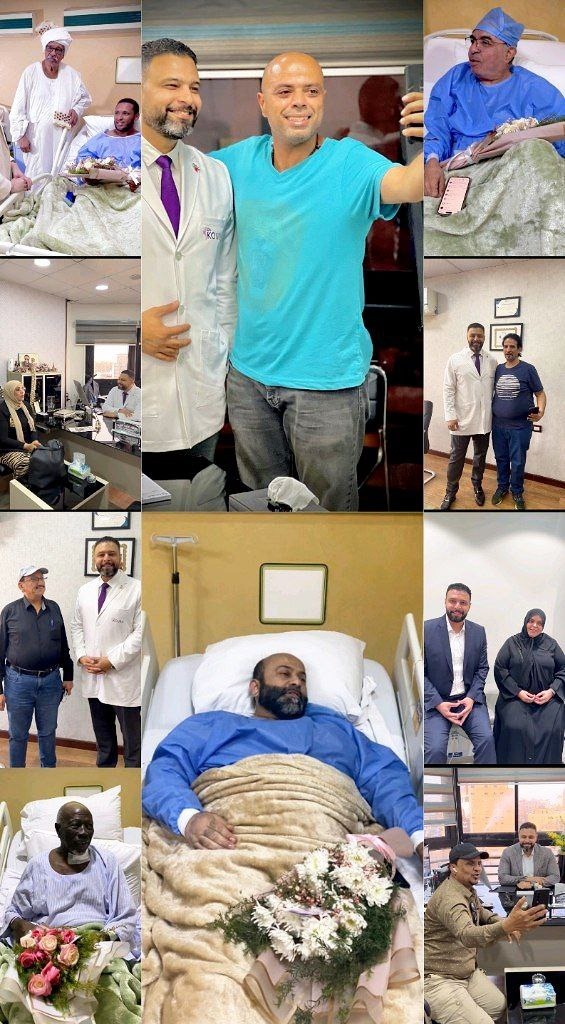
To see patients' reviews
Click hereMeniscus tear | Meniscal tears and their treatment without surgery

Symptoms
- Knee Pain
The cornerstone is a serious player responsible for support and protection of the joints; however, the tearing of menisci can often lead to serious health issues related to the Knee Joint. Beyond addressing the basic level of the problem, this research specifically seeks to find what interventions in non-surgical meniscus tear treatment work most effectively to minimize the Knee Pain and to stimulate the natural healing process of the joint. Dr. Mohamed Koura Center has gathered the latest in medical means and provision of care to patients to this effect.
This article also, in detail, discusses the fundamentals of rotator cuff tears. The culmination of everything is the negative function of the joint brought about by meniscal tears, as well as further practices in non-surgical practices advanced by Dr. Mohamed Koura Center to facilitate the healing period of the Knee Joint and thus improve the lifestyle of patients.
What is the Meniscus?
The meniscus are a sturdy network of tissues filled with collagen fibers and interspersed with cartilage cells. Their importance lies in the Knee Joint, where they act as cushions separating the thigh bone and the shin, supporting proper movement and reducing friction and wear in the Knee. These flexible pads are the inner and outer menisci, indispensable for joint health and safety.
What is the function of Meniscus?
The menisci perform the following functions for the Knee Joint:
- Joint stability: Menisci support the health and well-being of the Knee Joint to give it structural stability when in action.
- Friction reduction and shock absorption: Acting as mobile bearers between the femur and tibia, the menisci cushion the bones and distribute the two parts of the Knee Joint, eliminating friction while walking or running. The shock absorbers maintain a protective screen over the articular joints of the Knee.
- The meniscus helps distribute the synovial liquid across the joint via the articulating cartilage, giving the menisci the property of being needed to keep their nourishment and health within the Knee Joint.
- Weight and pressure distribution: The menisci ensure forces and moments are promptly applied through a larger interface rather than a smaller zone on the shaft of the tibia. Hence pressure is spread over the articular surface and away from the individual point and is directed onto the joint cartilage of the Knee.
As a result, one will be satisfied that the little functions of the menisci are taken for granted by patients associated with the Knee Joint and that their support and protection are crucial in maintaining the well-being of the Knee during various activities and daily living.
What are the types of Meniscus?
The meniscus in the Knee Joint consist of two main types, each with its unique characteristics:
- The two menisci are sewn together by the transverse ligament, promoting joint stability and protection from injuries in the Knee.
- In coordination with the stabilization of the joint, the role of menisci is in pressure distribution and shock absorption. Menisci thus serve to decrease stress loads on the Knee Joint anywhere from 30% to 70%, depending on the degree of knee flexion.
- It has been scientifically proven that the removal of the meniscus on its own or in total may decrease the contact surface to an extent of 50 to 70%, which may enhance pressure and forces on the meniscus cartilage of the Knee.
What are the causes of Meniscus Tear?
Meniscal tears can result from various causes, and these causes vary according to the individual's age, daily activities, and sports involvement. Here are some common causes:
- Sports Injuries and Accidents: At a youth stage and particularly among athletes, individuals may get injured, with sports activities like intense falls or Knee twisting may cause meniscus to tear, leading to Knee Pain.
- Aging and Natural Wear and Tear: The above previous process of aging and natural wear and tear, which includes factors such as normal degeneration and joint roughness, are not uncommon in damaging the meniscus of the Knee Joint.
- Poor Knee Lateralization: Knee alignment issues leading to increased pressure onto menisci are an example of poor lateralization and, thus, meniscal tears.
- Chronic Joint Irritation: Chronic joint inflammation can lead to meniscal tear; the resultant stress due to friction only further deteriorates under degenerative conditions affecting the Knee.
- Genetic Factors: Some genetic factors may increase susceptibility to meniscal tear in the Knee Joint.
What are the symptoms of Meniscus Tear?
Symptoms of meniscal tears vary depending on the location of the tear, whether it's internal or external, as follows:
Symptoms of Medial Meniscus Tear
- Sharp pain originating from inside the Knee, would feel discomfort on the inside of the Knee while undergoing any kind of physical stress, and this will aggravate after the event.
- Sudden locking of the joint perceived in different positions where the patients feel uneasy with flexion, as though the Knee Joint had seized up hard in a certain place.
- Pain is felt during full extension and flexion of the Knee, as well as twisting the Knee externally at a specific angle of bending.
- Mild swelling owing to the accumulation of synovial fluid within the Knee Joint, following severe activities.
Symptoms of Lateral Meniscus Tear
- Pain radiating outside of the Knee, increasing with greater secure intensity during or after exertion, with some episodes of Knee Pain after particular activities.
- Sudden joint locking in the Knee Joint.
- Pain is reserved for full extension and flexion of the Knee, followed by internal rotation of the Knee at some angular position with pain typically initiated.
- Mild swelling in the Knee Joint, with synovial fluid appearing in some cases.
- The above-reported symptoms, of course, exhibit meniscal tears requiring a visit to a doctor for proper treatment and diagnosis of Knee Problems.
What are the non-surgical treatment methods of Meniscus Tears?
Treatment for meniscal tears without surgery depends on several factors, including:
- The age of the individual and their level of physical activity.
- The type, location, and severity of the tear, along with accompanying symptoms.
- The time elapsed since the injury.
Here are some tips for treating meniscal tears without surgery:
- Ice and elevation: This helps reduce pain and swelling.
- Wearing a compression brace: This helps reduce the chance of excessive swelling and promotes knee stability.
- Taking anti-inflammatory medications: Such as aspirin or ibuprofen to alleviate pain and swelling.
- Avoiding participation in violent sports: For a period determined by the treating doctor.
- Additionally, in cases of meniscal tears accompanied by knee osteoarthritis, they can be treated without surgery as long as there is no sudden cessation in knee movement.
- In some cases, simple medical procedures may be performed, such as knee injections with platelet-rich plasma, which help in healing meniscal tears and stimulate the recovery process without the need for surgery. Additionally, tear removal can be done endoscopically.
- In conclusion, meniscal tear can be effectively and safely treated with non-surgical methods to alleviate pain and improve joint function. This is true at Dr. Mohamed Koura Center, where Dr. Koura, the best doctor in this field, stays abreast of the latest therapeutic techniques through his participation in various international conferences alongside top doctors and experts from around the world.
Book your appointment at the following numbers and get rid of meniscal tear pain, preparing for a pain-free and unrestricted life.
Dr. Mohamed Koura is here to assist you using the latest therapeutic techniques, including thermal radiofrequency and laser treatments for spinal pain without surgery—book your appointment now from here.
Why Choose Dr. Mohamed Koura ?
Simply because he is the best doctor in his feild. He stays updated on the latest treatment technologies through his participation in various international conferences with leading foreign doctors and experts. Finally, and most importantly, Dr. Mohamed Koura is the best doctor in Egypt and the Arab world, possessing 12 non-surgical techniques for treating spinal and joint problems. He was the first to introduce modern interventional treatment techniques in Egypt & the Middle East and is the only one using the disc fx technique to treat spinal pain.
Certainly not, some cases must be treated surgically, and the most appropriate technique for the patient is determined through a medical examination and the presence of imaging studies.
No, it is necessary to make a reservation through a phone call or social media messages.
There are no risks or side effects associated with non-surgical pain interventions.
The patient needs only 3 to 4 days before they can travel comfortably, and the hospital stay does not exceed 6 to 8 hours.
A condition cannot be accurately assessed and a proper medical diagnosis made without a medical examination and recent imaging studies.
Yes, there are several payment methods available through Visa or electronic wallets by making a reservation on our website.
Certainly, obesity is one of the causes of knee osteoarthritis.
Radiofrequency activates the nerve and does not cause any damage to it.
Non-surgical interventions are a definitive treatment for some cases and pain relievers for other cases, which is determined by the doctor through a medical examination.
If the herniated disc is fully treated, there is a possibility of it reoccurring in some cases, such as not following the doctor's prescribed instructions after the intervention, experiencing an accident, or making a sudden wrong movement like lifting heavy objects.
The entire disc is not removed due to the presence of several risks and it may exacerbate the condition. Only the protruding part that causes pain is removed.
This cannot be done with radiofrequency, but it is performed through other techniques that Dr. Koura conducts.
The success or failure of non-surgical interventions cannot be judged through radiographic imaging because these procedures involve making subtle changes to critical parts to address the issue. Consequently, they do not produce significant changes to avoid potential complications in the future or damage to the spine and joints, which is our primary goal.
Spinal stenosis does not typically cause sciatica. In most cases, disc herniation is what may lead to sciatica. This does not necessarily mean that a patient with sciatica will also have spinal stenosis.
Sciatica may return if the patient does not adhere to the medical instructions provided by the doctor or in the event of an unexpected accident.
Lower back pain can result from several causes, including a herniated disc, nerve compression, muscle strain, or chronic spinal injuries. Lifestyle factors such as prolonged sitting, muscle weakness, and excess weight can also exacerbate the problem.
Yes, most cases can be successfully managed with non-surgical treatment for lower back pain. Options such as medication, nerve root injection, disc injection, and radiofrequency therapy are highly effective in relieving pain and improving mobility without the need for surgery.
The best treatment for back pain depends on the cause and severity of the condition. Typically, it starts with medication for back pain, followed by minimally invasive procedures like nerve root injections or radiofrequency therapy to target the source of pain effectively.
Yes, radiofrequency therapy is considered a safe and effective option for chronic lower back pain. It works by interrupting pain signals from the affected nerves and provides long-lasting relief, especially in cases of herniated disc and spinal pain.
A life without pain without surgery
Once you book with Dr. Koura
Get rid of pain with just one call… Book your appointment now with Dr. Mohamed Koura, the best pain management doctor and a specialized consultant in spine treatment.
The highest success rates thanks to years of experience and scientific development
Using the latest non-surgical technologies available in Egypt and the Middle East
The largest team specialized in treating spine and joint pain without surgery





-webp.webp "Al watania poultry")



-webp.webp "Egyptian Takaful")
































Services
Our Branches
- Egypt
- +201210577770
- 54, intersection of Al-Batal Ahmed Abdel Aziz Street with the League of Arab States, above Qatar National Bank - Mohandiseen - Giza
- Dubai
- +971501232065
- Dubai Healthcare City Phase 2 - Al Jaddaf - Dubai - United Arab Emirates
- Libya
- +218934802987
- Ghairan rood, Janzur, ,Tripoli, Libya